

Puffin Photography Tours
Experience Alaska’s Best Puffin & Pelagic Photography Tours June-Oct
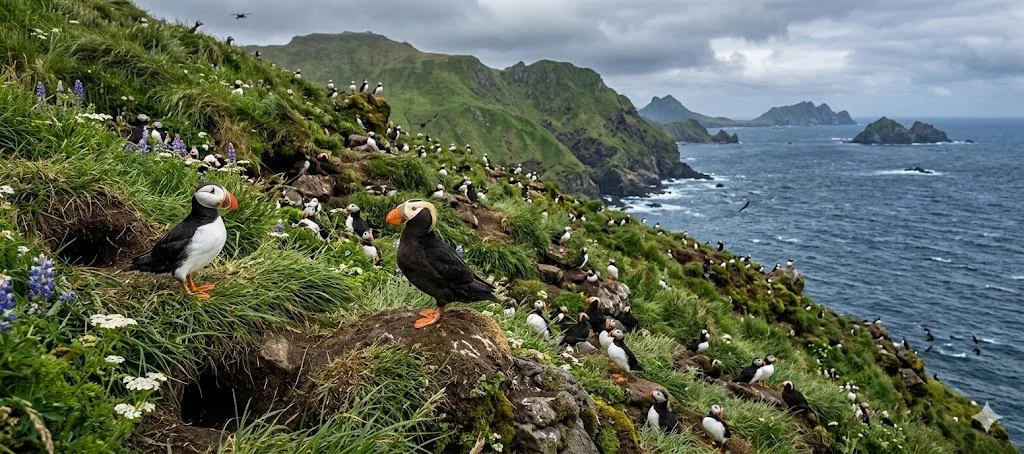
Puffins of the Aleutian Islands, Alaska
Volcano Bay and the nearby Aleutian Islands are the last hidden gem for Puffins and Seabirds. Birding enthusiasts seeking authentic Alaskan experiences without any crowds.
Puffins and Seabird Colonies
The island is a massive draw for pelagic birds and is widely recognized for its sheer density of nesting activity:
Horned Puffins: Amagat Island hosts one of the largest breeding colonies in the region. Historical biological surveys have estimated that more than 100,000 Horned Puffins nest on and around the island.
Tufted Puffins: Frequently seen flying in mixed groups with murres and foraging in the nutrient-rich waters surrounding the island.
Auklets and Murres: The area is a hotspot for whiskered auklets, crested auklets, and common murres.
Pelagic Species: As evening falls or weather shifts, the surrounding waters are heavily trafficked by northern fulmars, short-tailed shearwaters, pelagic cormorants, and black-legged kittiwakes.
Location and Geography
Our True Gem at the gateway to the Aleutian Islands is located at the end of Alaska Peninsula 650 miles sw of Anchorage. Geologically, the island is composed of twin intrusive plugs of porphyritic hornblende andesite, which give it a distinct, dome-shaped peak rising from the water (reaching an elevation of about 446 feet).
Like the rest of the Aleutians and the nearby Alaska Peninsula, the island features a rugged, entirely treeless environment. This sheer, rocky isolation makes it part of the Alaska Maritime National Wildlife Refuge and a highly protected, globally significant sanctuary for marine birds.
Amagat Island Overview
Amagat Island is a spectacular, dome-peaked island located near Morzhovoi Bay, just a short run west of the King Cove and Cold Bay areas. It stands as one of the premier seabird nesting sites on the lower Alaska Peninsula. The island is an absolute powerhouse for avian life, hosting massive colonies—including an estimated population of over 100,000 Tufted Puffins, alongside significant numbers of Horned Puffins.
Because it sits right on the edge of the Aleutian chain and the Bering Sea, the surrounding waters are incredibly nutrient-rich. This draws in not just puffins, but also murres, black-legged kittiwakes, shearwaters, and marine mammals. The near-shore kelp beds are also prime habitat for sea ducks, making it common to spot harlequins diving right along the rocky shorelines.
Fieldcraft & Logistics
For operating a wildlife photography camp, Amagat Island is an elite destination, though it is entirely reliant on the weather. Accessing the island requires reliable vessels capable of handling the open, often turbulent waters near the straits. Heavy-gauge aluminum rigs—like an Xtreme Duckwater—or rugged Zodiaks are ideal for navigating the chop and getting close to the cliffs safely.
Because the puffins nest on the sheer faces and steep upper slopes, the best photographic opportunities usually come from shooting directly off the boat. Mid-June is particularly excellent for capturing the birds rafting on the water in their full, vibrant breeding plumage, offering dynamic action shots as they skip across the surface to take flight.
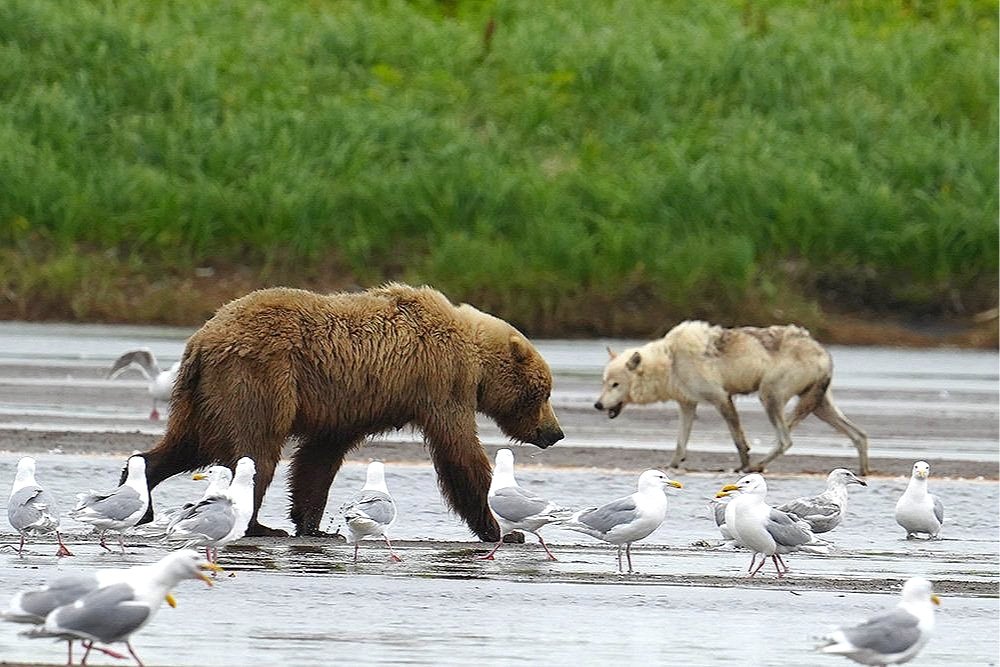
Wolf Photography Tours at Volcano Bay.
Prime Puffin Photography Season in the Aleutians , June 1-Aug 15
For 4–5 weeks each summer, Volcano Bay offers one of the most exclusive wildlife photography opportunities in Alaska: the chance to photograph and film wild Alaskan Puffin,Whales,Wolves and many species of Seals, Sealions in their natural habitat.
Access and Photography
Because of its protected status and rugged terrain, Amagat Island is generally accessed and viewed from the water. Navigating the coastal swells to get eye-level, high-resolution shots of puffins is accomplished best from our brand new custom 28ft all weather pilot house landing craft built for safety and comfort in mind. The drop down 6ft gate allows easy access for photographers and gear to get ashore or film from a stable platform with open views from the 12ft front open deck. All heavy-duty aluminum boat. The lack of trees and the stark, volcanic backdrop of the island provide incredible, dramatic lighting for wildlife photography, especially when capturing mixed flocks taking off from the water.and cliffs. The Morzhovoi Mistress will take you out and bring you back in style and comfort.
access to Alaska’s wild heart.
Sea Ducks and Marine Wildlife
While the summer brings the nesting seabirds, the waters around Amagat Island and Morzhovoi Bay are equally critical for wintering waterfowl. The coastal swells and rocky shorelines create an ideal environment for vast populations of sea ducks.
When working the waters around the island, you will frequently encounter rafts of King Eiders, Harlequin ducks, and long-tailed ducks that rely on these coastal waters. The area is also actively populated by coastal brown bears on the nearby mainland, sea otters, and Dall's porpoises navigating the passes.
Puffin Breeding Timeline at Amagat
The breeding season is tightly compressed due to the region's climate. Here is how the timeline typically unfolds for both Tufted and Horned puffins on these islands:
Late April to Mid-May (Arrival): The puffins return from their pelagic wintering grounds in the open North Pacific. Tufted puffins usually arrive first, with Horned puffins following about a week later. During this time, they spend a lot of time "rafting" in large groups on the water near the island to reconnect with their lifelong mates before heading up to the cliffs.
Early to Mid-June (Nesting & Egg Laying): This is when colony activity kicks into high gear. Tufted puffins will be aggressively digging out or reclaiming 3- to 4-foot soil burrows on the island's steep slopes, while Horned puffins claim the rocky cliff crevices and boulder gaps. Females lay a single egg during this window. By mid-June, the colony is a flurry of constant flight activity and courtship displays (like "billing," where pairs rub their colorful beaks together).
July (Incubation & Hatching): Both parents take turns incubating the egg for about 40 to 47 days. By mid-to-late July, the downy chicks (pufflings) begin to hatch.
August (Feeding the Chicks): This is peak action for capturing puffins in flight with bills stuffed full of sand lance, capelin, and small pollock. The parents commute relentlessly between the foraging grounds and the island to feed the chicks.
Late August to Early September (Fledging): Roughly 45 to 55 days after hatching, the chicks are ready to leave. They usually depart their burrows at night and head straight for the open ocean. By September, the adults shed their colorful outer bill plates, their plumage turns a drab gray, and they disperse back to the deep ocean for the winter.
Ready to go!
Call us today on 907-512-6344 to reserve your spot.